Custom Enclosure Design

Custom enclosure design solves what a stock box can't: an enclosure built to fit your electronics, survive its environment, and carry your brand, engineered as one job instead of bolted on afterwards. We design the enclosure as part of the product, then engineer it so it can actually be made. That is the difference between a box that houses your technology and an enclosure that helps the product succeed.

Book a call with one of our design engineers to talk through your enclosure.
Let's get talking
MICRIMA_IN SITU 1

Enclosure design is product design, not box-making

There’s a difference between buying an enclosure and designing one. Off-the-shelf boxes and fabricated-to-spec housings start from what a supplier already makes, or from a specification you have already worked out. That is fine when a standard box will do. It is a problem when the enclosure is part of the product, because the decisions that matter, how it houses the electronics, how it seals against its environment, how it feels and works for the user, how it carries the brand, and how it will be made, all have to be made by someone, and made together.

That is design and engineering work. Our guide to designing a custom enclosure walks through the full process. We do that work, so you get an enclosure designed around your product rather than one your product has to fit into.
How 4D approaches custom enclosure design

An enclosure answers to three things: what's inside it, the world outside it, and the factory that has to make it. We design for all three.

Built around your electronics and your users

The enclosure starts from the electronics it has to house: the board, connectors, displays and cabling, the heat they give off, and any shielding they need. Because we also do electronics design and user-centred design, those internal demands are resolved alongside the things the user cares about, such as how the product is held, opened, mounted and read, and how it looks. Designing the inside and the outside together is how you avoid an enclosure that fits the board but fails the user, or the other way round.

Engineered for its environment

Where a product lives decides how its enclosure has to be built. We design to the IP rating a product needs, sealing against water and dust, and we work with accredited external test houses to certify it. We also design for temperature, chemicals and impact, choose flame-retardant materials where fire standards apply, and, for equipment used in explosive or hazardous atmospheres, design to ATEX requirements. This is the same ground the specialist enclosure suppliers work on, handled as part of designing the product.

Built to manufacture, at the right volume

An enclosure is only as good as your ability to make it economically at the volume you need. We choose the manufacturing route to suit the product and the numbers, which is how we keep tooling costs proportionate, and we apply design for manufacture from the start.

What our clients say

"After researching multiple UK design firms, we chose 4D Products for their strong track record in high-quality, low-volume industrial enclosures. Their friendly, knowledgeable team gave us confidence from the start.

Working with 4D has been a pleasure—they fully understood our needs and exceeded expectations. We're grateful for their expertise and commitment, and look forward to future collaborations."
David Armstong
IMS - Managing Director

Custom enclosure design in practice

The proof is in the products. Three enclosures we designed, and what each had to do.
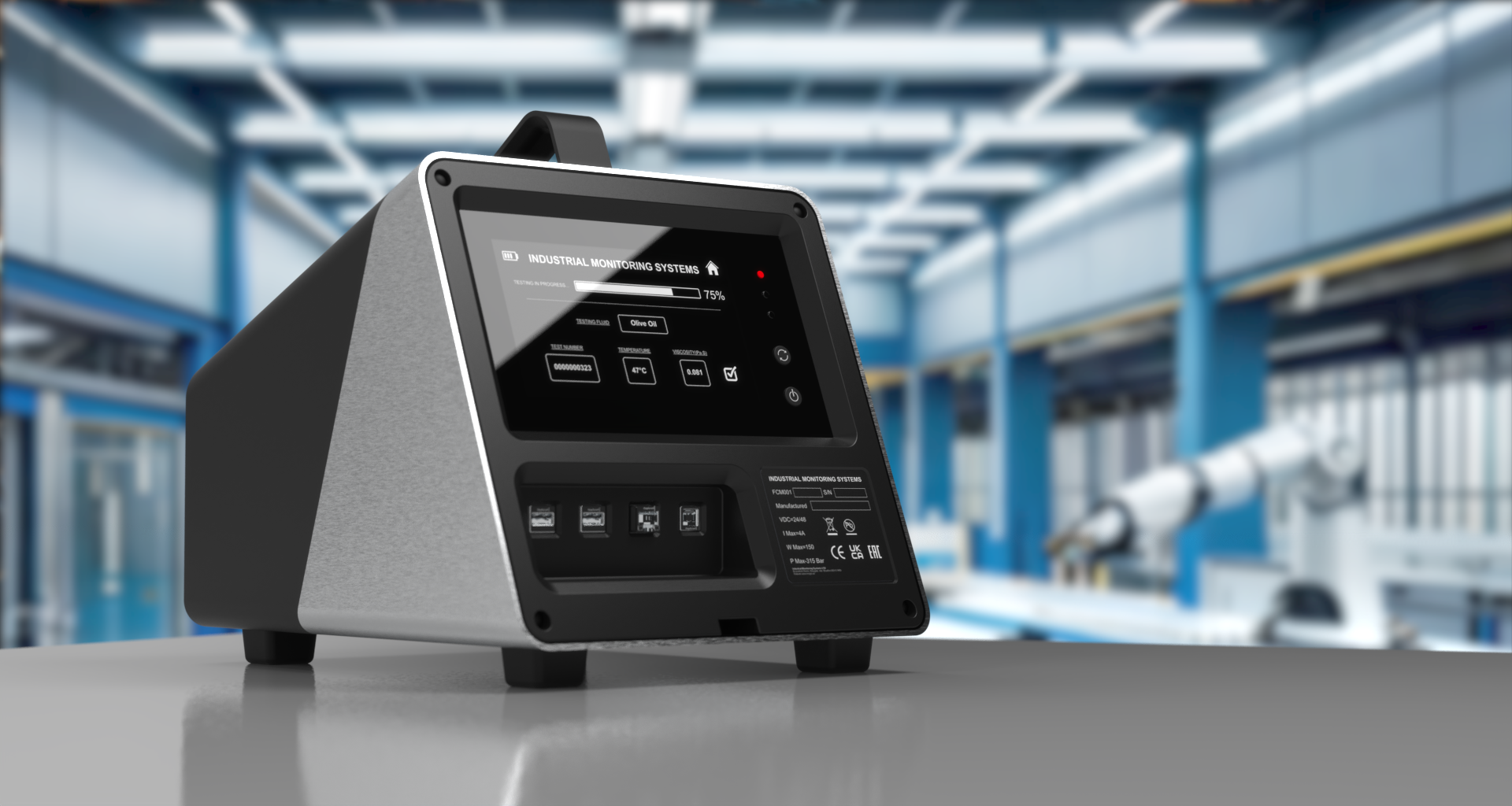
Industrial Monitoring Systems needed custom enclosure design for a portable fluid cleanliness monitor, built to IP65. Designing it properly cut manufacturing cost by 20% and sped up assembly significantly. Managing Director David Armstrong chose 4D for our track record in custom industrial enclosures, calling the impact transformative.
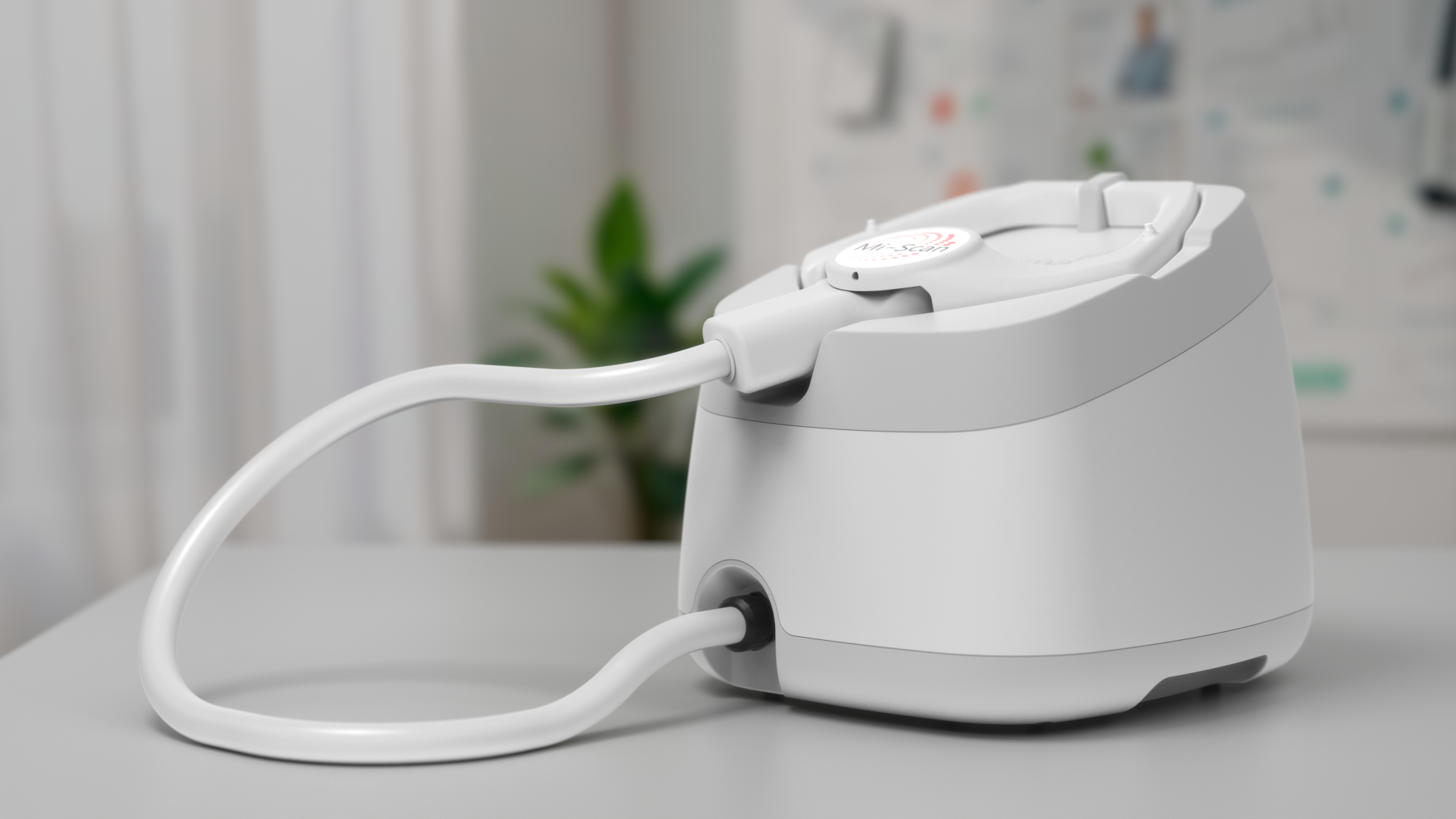
Micrima's breast-scanning device needed a custom enclosure design that could clear EN 60601: a Faraday-shielded housing and docking station built to the standard from the outset. Compliant prototypes were ready within 12 weeks and went straight into NHS trials. CTO Leigh Cornock credited the speed and compliance for getting their technology into trials.
Sontay needed a custom enclosure design that could survive demanding building-management environments. We designed to IP65, refining sealing, mounting and cable management until it stayed dust and water-tight while remaining easy to install. Sontay reports better reliability and fewer installation issues as a result.
To talk through the enclosure your product needs, get in touch with our team, or learn more about us, our team and our values.

Talk to us about your enclosure

If your product needs an enclosure designed, not just a box to fit into, we can help. Book a call with one of our design engineers to talk through what it has to house, where it has to work, and how it will be made.

Custom enclosure design FAQs

Why choose a custom enclosure over an off-the-shelf one?

An off-the-shelf box is a compromise: your product has to fit around it. A custom enclosure is designed around your product, so it fits the electronics, seals to the rating you need, works for the user and carries your brand. Over a production run, a design suited to your product and volume can also work out more cost-effective than repeatedly adapting or compromising around a standard box.

What IP rating can you design to, and can you certify it?

We design enclosures to the IP rating your product and its environment require, from splash resistance through to full protection against dust and immersion, and we work with accredited external test houses to certify the rating when you need proof of it.

How do you choose the right materials?

It depends on what the enclosure has to survive. We work across plastics and metals and choose for the environment: flame-retardant grades where fire standards apply, antimicrobial materials for clinical or shared-use products, and glass-filled plastics where a part needs to be especially rugged. The right choice comes out of a clear specification, not a default.

Can you keep tooling costs down at low volume?

Yes. Injection moulding makes sense at scale, but its tooling is expensive for small runs, so for lower volumes we use processes like RIM or vacuum casting, which avoid that upfront cost and can bridge you towards full production as demand grows. We choose the route to suit your numbers, and can take the design through to manufacture with our partners.

Can you design an enclosure around our existing electronics?

Often, that is the starting point. Many of our enclosure projects begin from a client's electronics or a working assembly that needs a housing, as with Micrima and Sontay. We design the enclosure around what you have, resolving fit, thermal, shielding and access, and flag anything about the electronics or mechanics that would make the housing harder to build or seal.

Can you design for harsh or hazardous environments?

We do. Alongside sealing and resistance to temperature, chemicals and impact, we design for regulated hazards where they apply, including equipment intended for use in explosive or potentially hazardous atmospheres, which in the UK falls under ATEX. We design to the relevant requirements and involve the right test and certification partners.

Who owns the enclosure design and the IP?

Ownership is agreed in writing before work begins, so there is no ambiguity later. In most of our engagements, the design and the resulting intellectual property belong to you.