Product Concept Design Services

A product's cost is largely set before it is engineered in detail. The choices made at the concept stage, about what the product is, who it is for and how it will be made, shape most of what it will cost to make, and much of its commercial risk. Getting those choices right is the job of concept design.

Our product concept design services turn an early idea into a direction that is buildable, manufacturable at the cost you need, and commercially sound, before development money is committed against it. That is the difference between a concept that impresses in a presentation and one that survives contact with manufacturing, real users and a budget.

Book a call with one of our product designers to talk through where your concept is now.
Let's get talking
002_CONCEPT DESIGN

Why the concept stage decides a product's commercial success

By the time a product reaches detailed design and tooling, most of the decisions that fix its cost have already been made. Concept design is where those decisions happen, so it carries more commercial weight than any stage that follows. A concept that has been validated against manufacturing, users, and a target cost gives the rest of development a clear direction to build towards. One that skips that validation tends to push its problems downstream, where they are slower and more expensive to resolve.

The stages of conceptual design, and the thinking behind them, are covered in our guide to the importance of conceptual design.

A well-run concept stage takes specific risks off the table while they are still cheap to address:
  • Building the wrong product: It confirms the idea solves a real problem for a defined user before money is committed to engineering it.
  • Designing something that cannot be made economically: It tests manufacturability and cost against the target price while changes are inexpensive.
  • Late redesigns: It surfaces the hard problems early, rather than during production when they hold up the line.
  • Missed timelines: It gives development a validated direction to work from, usually the quickest route to market.

How 4D Products approaches concept design

Concept design is only as good as the judgement behind it, and ours comes from taking products through to manufacture, not just to a rendering. Concept work here is part of our wider product design consultancy, and three things shape how we handle it.

Commercial and manufacturing constraints from day one

Before we explore any direction, we get clear on what the product has to achieve commercially: the cost it needs to hit, the market it sits in, and the constraints it has to respect. Concepts are judged against those constraints, so the ideas that move forward can succeed as products, not just as designs. Where a product's commercial position needs shaping alongside its design, our commercial strategy work runs in parallel, and design for manufacture thinking is applied from the first sketch rather than bolted on later.

Design and engineering in the same hands, so concepts are built to be made

A concept that cannot be engineered or manufactured at cost is not much use, however good it looks. We are a small, senior team who both design and engineer: the mechanical and electronics engineering is done by the same team that shapes the concept, not handed to a separate department, so buildability is worked in as a concept takes shape rather than discovered afterwards.

So the practical questions that decide whether a concept is viable get worked through while it is still easy to change: how the product is housed and sealed, how it fits together, and how it performs for the people who will use it. Designing around real user needs is part of the same conversation, not a separate exercise.

Concepts tested and challenged before you commit

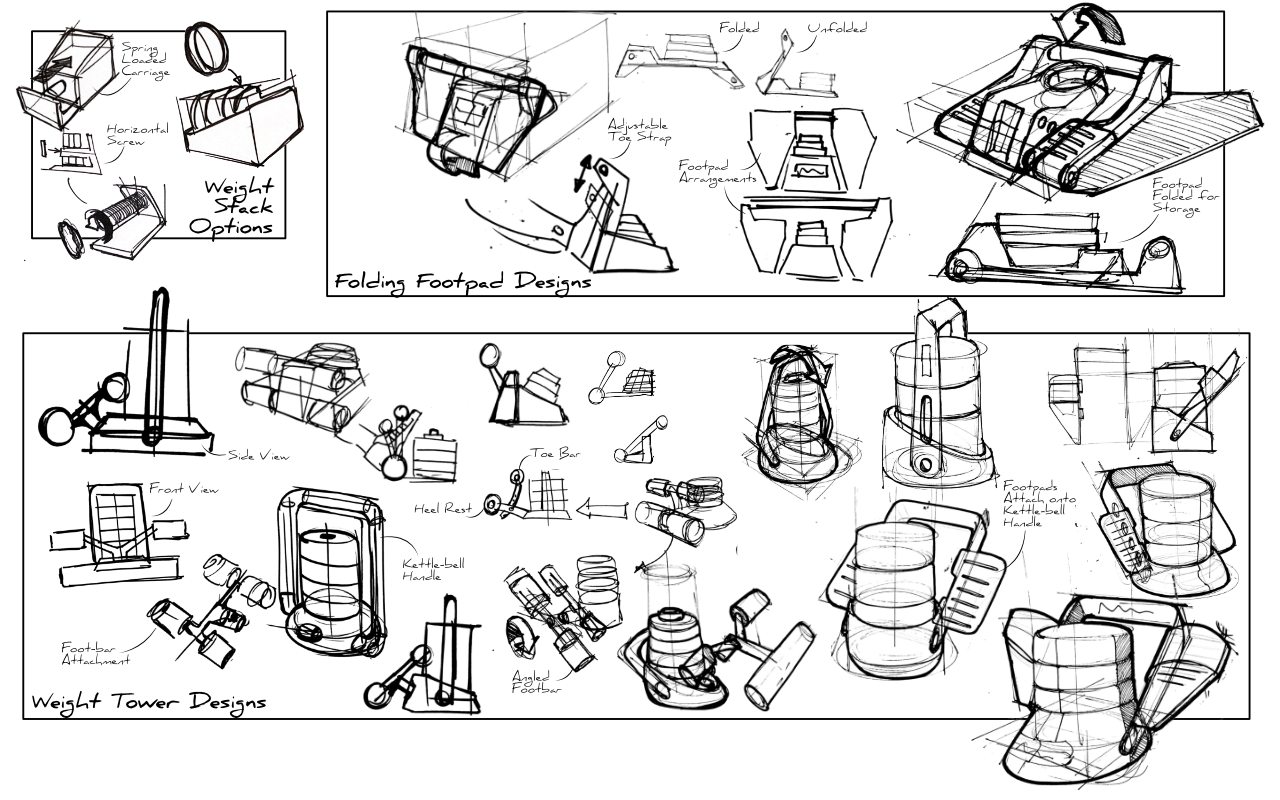
We do not present concepts and hope they hold up. Weak directions are challenged and dropped early, using quick prototypes, feedback from real users, and input from our manufacturing partners on anything likely to cause problems downstream. The concepts that survive that scrutiny are the ones worth developing, and they move into 3D CAD and detailed design with the biggest risks already understood.

What our clients say

"4D Products were pivotal in the development of this product, significantly contributing to the global launch of our Rezzil Player Pro.

We look forward to continuing our collaboration with 4D Products on future projects, beginning with the next set of accessories for the Formula One market."
Gareth Thatcher - Technical Director
Rezzil

Concept design in practice

The value of getting the concept right shows up in the products themselves. Three examples.
We developed an urban skills trainer for practising football at home. The concept had to work reliably, be economical to manufacture and be genuinely enjoyable to use, and resolving that balance early is what made it commercially viable rather than simply clever. It went on to sell more than 1,000 units, was adopted by professional football clubs in the UK, and the company reports that its first year of sales repaid the entire development cost.
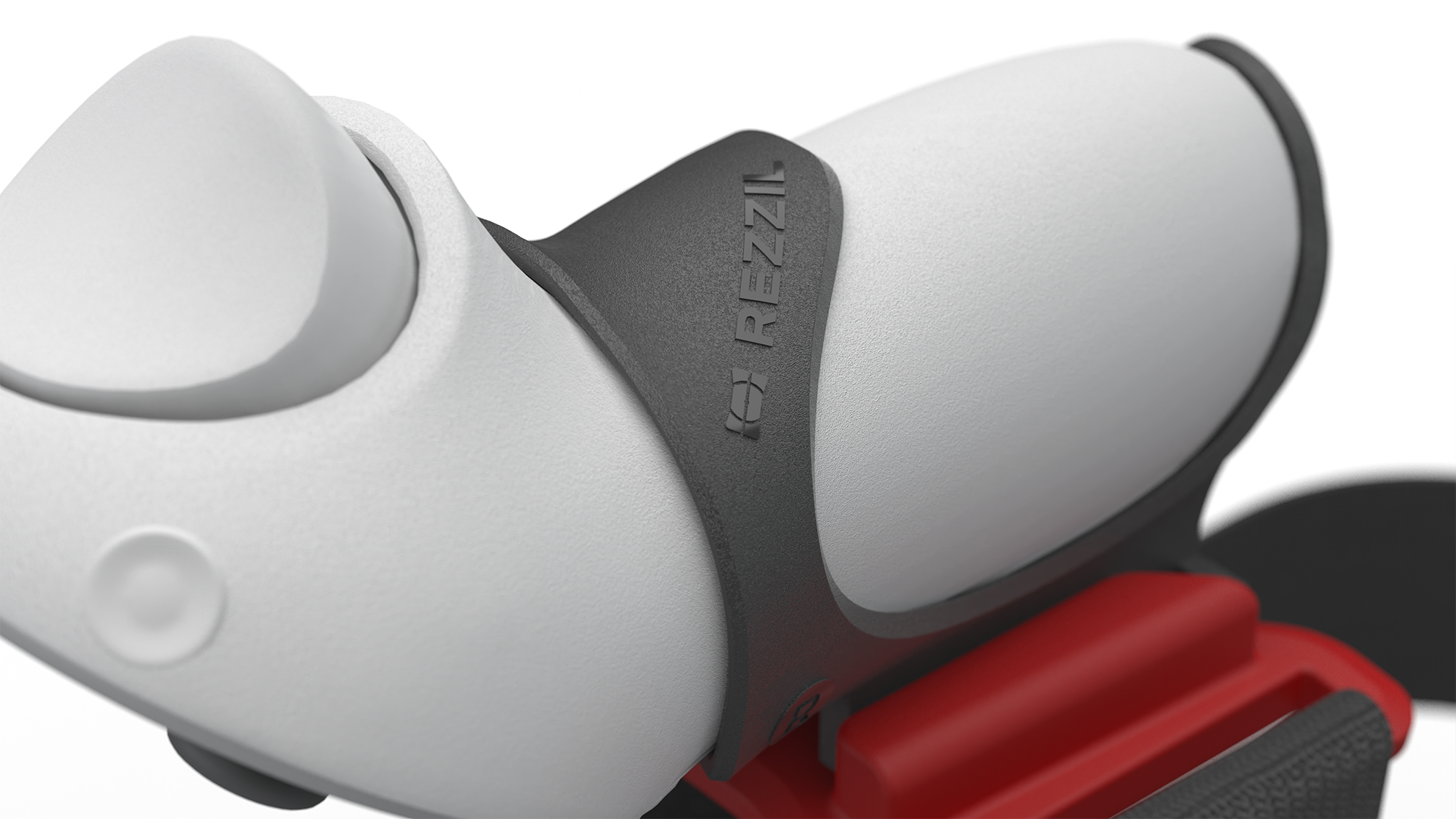
We designed a foot-mounted VR training accessory for elite athletes, working from sketches to a settled design direction, then validating it with CAD and prototypes before committing to the final models, all within a six-week brief. The design secured a global patent and won Best in Show at Meta's Creator Week 2022. Rezzil's Technical Director, Gareth Thatcher, called 4D "pivotal in the development of this product", which contributed to the global launch of the Rezzil Player Pro.
For a rapid-response medical device during the COVID-19 pandemic, the concept had to be resolved at speed and to medical standards. Working with Medisyne's clinical and engineering teams, we moved from sketches to functional prototypes quickly, settling the decisions that mattered most, intuitive operation, robust build and easy cleaning, at the concept stage. The device went from concept to deployment in weeks and into hospitals across the UK.
To talk through how the concept stage could take risk out of your own product, get in touch with our product design team, or learn more about us, our team, and our values.

The expertise behind a concept

Concept work draws on the same in-house team that takes a product all the way to manufacture. The disciplines that shape and de-risk a concept include:
We apply this across the sectors we work in, from industrial and medical to sports and fitness and consumer products.

What working with 4D looks like

Choosing a partner for the concept stage is a practical decision as much as a creative one.

What you get from the concept phase

You get more than sketches and renderings. The concept phase leaves you able to make an informed decision about your product's direction, with the reasoning behind each option made explicit:

Considered concepts, not just visuals: directions developed against user needs, manufacturability and cost, rather than styling alone.

The reasoning behind them: why each concept was pursued or set aside, so the decision is yours to make on the evidence.

A clear next step: a practical route from the chosen concept into detailed design and development.

How long the concept phase takes

Most concept phases run for around two to six weeks, depending on the complexity of the product. Simpler products move faster; more complex ones, or those with several directions worth exploring, take longer. It is rarely worth rushing this stage, because the time spent resolving the concept properly is usually recovered later by avoiding far more expensive changes once development is under way.

How your IP is protected from day one

Intellectual property is handled carefully from the outset. Where it is useful, we arrange early patent searches to check freedom to operate, either through a trusted IP attorney we work with or in collaboration with your own IP lawyers. Innovations are documented properly as they emerge, and all work is covered by robust non-disclosure agreements. Protecting your design IP at the concept stage, before ideas are shared more widely, is far simpler than trying to recover ground later.

Built to flex as the concept develops

Concept work is broken into stages with regular reviews, so you are never far from a decision point. Changing direction, or exploring something you had not considered, is straightforward while the design is still on paper rather than in production.

Concept design across your sector

We apply the same concept discipline across the sectors we specialise in: industrial, medical, sports and fitness, and consumer products. The commercial and engineering questions change from one sector to the next, but the goal does not: a concept worth developing into a product. Where it matters, sustainable product design considerations, from material choice to end of life, are built into the concept rather than added afterwards.
Talk to us about your concept

Strong concept work takes cost and risk out of a product before development begins, while change is still cheap. If you have an idea, or a product that needs rethinking, book a call with one of our product designers to talk it through.

Concept Design FAQs

What if we already have concept ideas?

Having ideas already is a good starting point. We will look at what you have, develop it, and be honest about where it is strong and where it could be improved commercially or technically. Sometimes that means refining a direction you are already committed to. Sometimes it means pointing out an option, or a risk, you had not considered.

We already have a concept that isn't working. Can you help?

Often, yes. We are regularly brought in when a concept has stalled, come back over budget to manufacture, or failed to land with users. We will look at where it went wrong, whether that is the design, the engineering, the cost or the fit with the market, and give you an honest view of what it would take to put it right.

What if we are not sure exactly what we want yet?

That is a common and perfectly workable place to start. Before exploring directions, we help define the problem the product needs to solve, who it is for, and the constraints it has to work within. Getting those foundations clear is what makes the concepts that follow purposeful rather than speculative.

Couldn't we just use AI tools to generate concepts?

AI tools are useful for quick visualisation and for exploring early ideas. However, what they don’t do is resolve the things that carry the real commercial risk: whether a concept can be engineered, manufactured at your target cost, and stood up in front of real users. That judgement is where a concept succeeds or fails.

What if we're working to a tight target cost?

Then we design to it from the start, rather than discovering the problem later. Cost and manufacturability shape how we judge every concept, and we involve our manufacturing partners early to pressure-test what is realistic. If a target cost genuinely cannot be met without compromising the product, we will tell you at the concept stage, while it is still cheap to change course.

Can you work alongside our in-house team?

Yes. We often work as an extension of an in-house team, adding specialist concept, design and engineering input, or extra capacity, at the points where it is needed. That might mean leading the concept stage outright, or supporting your own people through it.

Can you take the product beyond the concept stage?

Yes. Concept design sits within our full product design and development service, so the same team can carry a chosen concept through detailed design, engineering, prototyping and into manufacture. You are not left with a concept and no route to production.

Who owns the concepts and the IP you create?

All Intellectual Property Rights (IPR) – including copyrights, design rights, patents for designs, drawings, documents, models, digital files, reports, specifications, and prototypes – belong to our client, but only after any outstanding invoices have been paid in full.

How is a concept design project scoped and priced?

Our initial concept stage is scoped with a telephone, video or face to face meeting to gain a clear understanding of your project. Here will look to identify your requirements including budget restraints so we have a clear list of parameters to build a cost proposal around.