
Three weeks to solve a design problem that's holding up production. Four weeks to iterate a prototype based on user testing feedback before the next funding milestone. Six weeks to develop a component that needs to integrate with a larger system that's already being manufactured.
Compressed development timelines aren't always about trade shows or investor meetings. Sometimes they're just the reality of product development—technical problems emerge that need solving quickly, testing reveals issues that require immediate iteration, or dependencies in complex projects create narrow windows for specific work to happen.
The question isn't whether rapid sprints are ideal. They're not. Given unlimited time, every project would benefit from more research, more testing, more refinement. But time isn't unlimited, and sometimes the choice is between delivering something good in three weeks or delivering something perfect too late to matter.
Rapid product sprints work when teams understand what's actually achievable in compressed timeframes, make smart decisions about what to prioritise, and accept the trade-offs that come with speed. They fail when expectations are unrealistic, priorities keep shifting, or teams try to do everything at once.
The achievable scope of a rapid sprint depends entirely on where you're starting and what you're trying to accomplish.
The further along a project is, the more achievable rapid iteration becomes. Starting with an existing design that needs refinement is fundamentally different from starting with a blank page. The core concept is proven, the general direction is clear, and the work focuses on improvement rather than invention.
When a component isn't working as intended or a mechanism needs redesigning, focused effort can produce solutions quickly—but only if the problem is well-defined. Vague challenges like "make it better" or "improve the user experience" don't lend themselves to rapid resolution because too much time gets spent just figuring out what the actual problem is.
Physical prototyping has inherent time requirements that determine how fast iteration can actually happen.
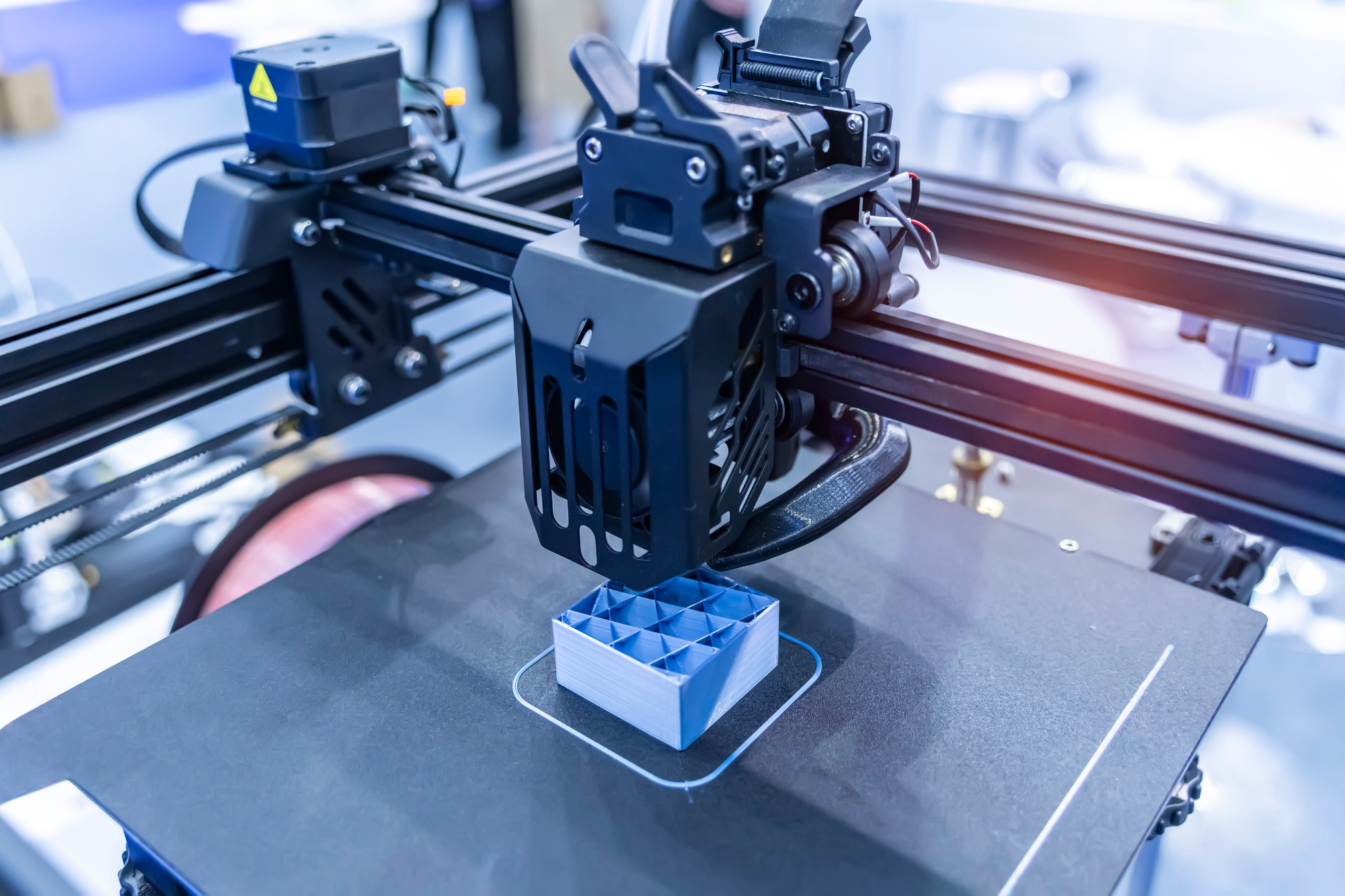
3D printing is fast for single parts but still takes hours or days depending on size and complexity. A small component might print overnight. A larger part could take two days. Printing multiple iterations in parallel requires multiple machines or accepting that each iteration adds days to the timeline.
Print quality and material properties also affect speed. Fast prints with thick layers and minimal infill finish quickly but look rough and may not be strong enough for testing. High-quality prints with fine details and solid construction take longer. Choosing the right balance for what needs testing determines how quickly iterations can happen.
CNC machining produces parts with better material properties and surface finish than 3D printing, but it's slower and more expensive per iteration. Programming toolpaths, setting up machines, and actual cutting time add up. Simple parts might be ready in a day or two. Complex parts with tight tolerances can take a week.
Machining is most useful when material properties matter for testing—when parts need to be metal, or when strength and durability are being validated. For pure form and fit checks, 3D printing is usually faster.
Raw prototypes need finishing work. Sanding, painting, assembly, and detail work all take time. A 3D printed part might finish overnight, but making it look presentable could take another day or two. Multiply that across multiple parts in an assembly, and finishing time becomes significant.
Assembly itself reveals problems. Parts that looked fine individually might not fit together properly. Tolerances that seemed adequate in CAD turn out to be too tight or too loose. Each discovery requires adjustment, which means more prototyping time.
Testing takes as long as it takes. If a prototype needs to run for 24 hours to validate reliability, that's a day out of the timeline regardless of urgency. If user testing requires scheduling participants and observing sessions, that's time that can't be compressed much.
The temptation in rapid sprints is to skip or shorten testing. This works only if you're willing to accept the risk of problems emerging later. Sometimes that's an acceptable trade-off. Often it's not.
Certain project situations make rapid development not just useful but necessary.
When a design flaw emerges late in development that prevents moving forward, rapid iteration becomes critical. Production might be scheduled, other components might be ready, and the entire project waits on solving one specific problem. Focused effort on that bottleneck can unblock everything else.
These situations work for rapid sprints because the problem is well-defined and the success criteria are clear. Either the solution works or it doesn't. There's no ambiguity about what needs to happen.
Some development approaches intentionally use short cycles—build something, test it, learn from it, build the next version. Each cycle might be two to four weeks. The goal isn't perfection in each iteration but rather continuous improvement based on real feedback.
This works when the team accepts that early iterations will be rough and incomplete. The value is in learning quickly rather than getting everything right the first time. Each sprint builds on the previous one, gradually refining toward the final product.
Complex products with multiple subsystems often have integration points where everything needs to come together. If one component isn't ready when others are, the integration gets delayed and the entire project timeline slips.
Meeting integration deadlines sometimes requires compressed development of specific components. The surrounding system is ready, the interfaces are defined, and the component needs to be finished to keep the project moving.
Production schedules at manufacturers aren't infinitely flexible. If there's a slot available for a production run and the product isn't quite ready, the choice is between finishing quickly to use that slot or waiting months for the next opportunity.
The cost of waiting—delayed revenue, missed market windows, competitors gaining ground—sometimes justifies intense effort to finalise details and prepare for production faster than would normally be comfortable.
Competitors launch products that change market expectations. Regulations change that require design modifications. Customer requirements shift based on new information. These external factors sometimes force rapid response to stay relevant.
The challenge is distinguishing between changes that genuinely require urgent response and those that feel urgent but aren't. Not every competitor move demands immediate reaction. Not every customer request needs to be accommodated instantly. Choosing which external pressures warrant rapid sprints and which don't is a strategic decision.
Every rapid sprint involves sacrificing something. The skill is choosing what to sacrifice strategically.
When time is the constraint, these are the decisions that determine success or failure:
Trying to address multiple problems simultaneously in a compressed timeline means none get solved thoroughly. Focusing on one or two critical issues allows for proper depth—understanding the problem fully, exploring solutions adequately, and validating that the solution actually works. Breadth can come later. Once the critical issues are resolved, other improvements can be addressed in subsequent phases.
Rapid sprints require moving quickly from problem to solution. There's limited time for exploring multiple options, building comparison prototypes, or extensive research. The approach needs to be: identify the most promising direction and execute it well rather than exploring every possibility. This works when there's enough existing knowledge to make informed decisions quickly.
A prototype that works but looks rough can be refined later. A prototype that looks beautiful but doesn't function properly is useless. In compressed timelines, function takes priority. Get it working first, then worry about appearance if time allows. The exception is when the specific goal requires appearance—if the prototype is for presentation or demonstration where visual quality matters.
Compressed timelines change how teams operate and communicate.
Decisions that would normally take days or weeks need to happen in hours. This requires people who are empowered to make calls without extensive approval processes. Waiting for sign-offs kills momentum in rapid sprints.
It also requires accepting that some decisions will be made with less information than ideal. Perfect information isn't available in compressed timelines. Good enough information combined with experience and judgment has to suffice.
Daily check-ins replace weekly meetings. Problems get flagged immediately rather than waiting for the next scheduled update. Everyone needs to know what everyone else is doing because work is happening in parallel and dependencies are tight.
This level of communication is exhausting to maintain long-term, which is why rapid sprints work for weeks, not months. The intensity isn't sustainable, but it's manageable for short periods when necessary.
In normal development, sequential work reduces risk—finish one thing, validate it, then move to the next. In rapid sprints, work happens in parallel to save time. Design continues while prototypes of earlier versions are being built. Testing happens on incomplete versions while refinements are already underway.
This creates risk that work might need to be redone if earlier assumptions prove wrong. The trade-off is accepting that risk in exchange for speed. Sometimes it works out. Sometimes it doesn't, and effort gets wasted. The judgment is whether the potential time savings justify the risk.
Rapid sprints require ruthless focus. Anything that doesn't directly serve the immediate goal gets deferred. Feature requests get declined. Nice-to-have improvements get noted for later. Scope creep is the enemy of compressed timelines.
This requires discipline from the entire team and stakeholders. Everyone needs to understand and respect that the sprint has a specific, limited objective. Expanding that objective mid-sprint makes the timeline impossible.
Understanding what goes wrong helps avoid common pitfalls.
These are the red flags that indicate a rapid sprint is heading toward failure:
If the team isn't aligned on what success looks like, effort gets wasted pursuing different goals. One person thinks the priority is functionality, another thinks it's appearance, another thinks it's cost. Without clear, shared objectives, the sprint fragments and nothing gets finished properly.
When stakeholders change their minds mid-sprint about what matters, the timeline collapses. Work that's already done becomes irrelevant. New work gets added that wasn't planned for. The team ends up reacting to changing requirements rather than executing a clear plan.
Sometimes problems turn out to be harder than anticipated. A solution that seemed straightforward reveals unexpected complexity. A component that should have been simple to source isn't available. Testing reveals issues that require fundamental rethinking. These surprises can't always be predicted, but experienced teams get better at recognising warning signs early.
Working at high intensity for weeks is tiring. Fatigue leads to mistakes—design errors, miscommunication, poor decisions. The cost of fixing mistakes can exceed the time saved by working faster. Sustainable rapid sprints recognise this and build in some buffer. Not every hour of every day can be maximum intensity.
Success in compressed timelines comes from preparation and discipline.
The first 20% of a rapid sprint determines whether the rest succeeds. Spending time upfront to clarify objectives, define scope, identify constraints, and align stakeholders prevents confusion and wasted effort later.
This feels counterintuitive when time is short—the instinct is to start building immediately. But starting without clarity means building the wrong thing or building the right thing wrong. Either way, time gets wasted.
Rapid sprints need people with experience who can make good decisions quickly. Junior team members learning as they go slow things down. This isn't about capability—it's about having the pattern recognition that comes from having done similar work before.
Small teams work better than large ones in compressed timelines. Communication overhead increases with team size. A small, experienced team that communicates constantly outperforms a larger team that needs coordination.
The prototyping methods, design tools, and workflows need to match the timeline. Processes that work well for long-term development might be too slow for rapid sprints. Choosing faster methods—even if they're less optimal in other ways—makes sense when speed is the priority.
This might mean 3D printing instead of machining, simplified CAD instead of fully detailed models, or hand-finishing instead of perfect surface treatments. The tools serve the timeline, not the other way around.
Even in compressed timelines, periodic checkpoints to validate direction prevent going too far down wrong paths. A quick review at 25%, 50%, and 75% through the sprint catches problems while there's still time to adjust.
These checkpoints need to be fast—an hour, not a day. The goal is confirming the work is on track, not comprehensive review of every detail.
Perfection isn't achievable in rapid sprints. The standard is good enough for the specific objective. A prototype that's 80% right and finished on time is more valuable than one that's 95% right but a week late.
This mindset shift is difficult for teams used to refining until everything is optimal. But in compressed timelines, knowing when to stop is as important as knowing what to do.
Rapid product sprints aren't ideal. Given more time, better solutions emerge, more options get explored, and refinement produces higher quality results. But product development doesn't always offer ideal conditions.
Sometimes the timeline is what it is, and the choice is between delivering something good quickly or missing the window entirely. Technical problems don't wait for convenient timing. Integration deadlines don't move because one component isn't quite ready. Manufacturing slots don't stay open indefinitely.
The companies that handle compressed timelines well aren't the ones that can magically work faster than physics allows. They're the ones that make smart decisions about what to prioritise, accept trade-offs consciously rather than accidentally, and execute focused plans without getting distracted by scope creep.
Rapid sprints work when objectives are clear, teams are experienced, resources are available, and everyone understands what's being sacrificed for speed. They fail when expectations are unrealistic, priorities keep shifting, or teams try to do everything at once.
The skill isn't making everything happen faster. It's knowing what can happen faster, what can't, and making deliberate choices about where to focus limited time for maximum impact.